
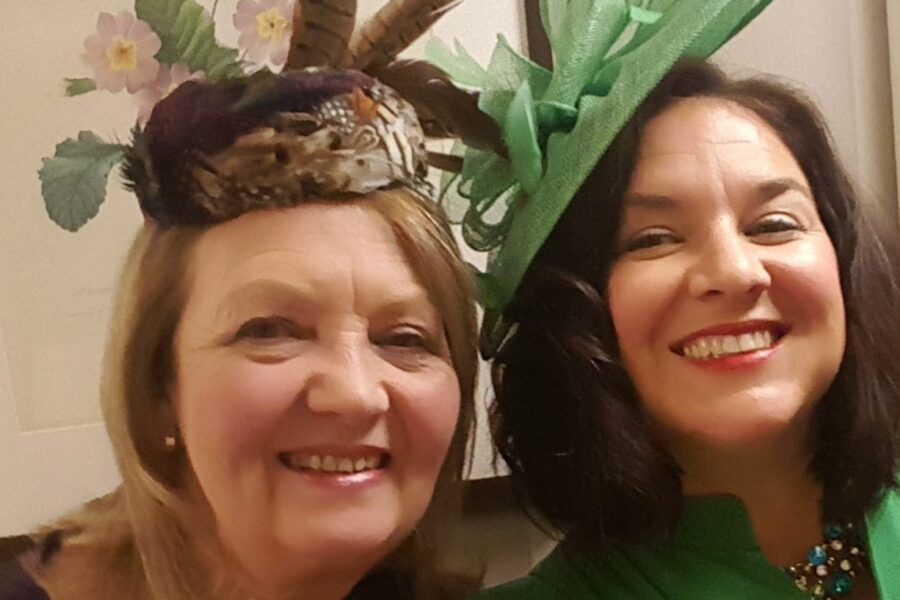
An Essex woman avoided a trip to A&E after getting help from a free NHS service for new eye problems.
The Minor Eye Conditions Service (MECS) helps people with eye problems that have started recently. It is available at participating opticians across Essex, without needing to see a GP first.
Jayne Mason, from Thurrock, discovered the service when her mum developed a red, painful eye.
Her mum was considering going to A&E, but Jayne first contacted her usual optician. When they could not offer an appointment, Jayne searched online and found another practice offering MECS in Pitsea.
After a short telephone assessment, her mum was offered an appointment within 30 minutes.
An optometrist, a healthcare professional who examines eyes, checked her symptoms and reassured her that there was no serious problem requiring further treatment.
“When I visited Mum, she had developed a red, painful eye and was considering going to A&E. Her usual optician couldn’t offer an appointment, so I searched online and found another local practice offering MECS.
Jayne said
“After a quick telephone assessment, Mum was offered an appointment, had a thorough examination and, most importantly, we were reassured that there was nothing seriously wrong.
“The whole experience was excellent. Mum got expert advice quickly and conveniently, and it meant we avoided an unnecessary trip to A&E. It’s a useful service for people to know about.”
How the NHS eye care service can help
The Minor Eye Conditions Service can assess and treat a range of new eye problems, including:
- Red or sore eyes
- Dry, gritty or uncomfortable eyes
- Eye irritation or swelling
- Watery eyes
- New flashes or floaters in your vision
- Eye pain
- Ingrowing eyelashes
- Small objects in the eye, such as grit
You do not need a referral from your GP.
The service is free for eligible patients and is available through participating optical practices across Essex.
“Jayne’s experience shows how the Minor Eye Conditions Service can help people get the right eye care quickly and closer to home.
Dr Boye Tayo, Clinical Lead for Eye Care at NHS Essex, said:
“If you develop a new or recent problem with your eyes, such as redness, soreness, irritation or new flashes and floaters, you may be able to get help from a participating local optical practice without seeing your GP first.
“The optometrist will assess your symptoms and can provide treatment where appropriate. If you need care from another NHS service, they can advise you about what to do next.
“We want more people in Essex to know that this service is available and to consider it when they develop a new eye problem.”
How to get an appointment
If you have a new eye problem, you can contact a participating optical practice directly.
- Find a local practice offering the Minor Eye Conditions Service.
- Call the practice and ask for a MECS appointment.
- Answer some questions about your symptoms.
- The practice will advise you about an appointment or what to do next.
Depending on your symptoms, you may be offered an appointment within 24 hours or within a few working days.
Call before visiting. Do not turn up without an appointment.
Find out more about the Minor Eye Conditions Service and how to get an appointment.What patients say about the service
In a survey of 641 patients who used the service in mid and south Essex between April and June 2026:
- 96% said they would recommend it to family and friends.
- 35% said they would have gone to their GP without the service.
- 20% said they would have gone to A&E.
The results show how the service can help people find an alternative to visiting their GP or A&E for some eye problems.
When to get emergency help
ome eye problems need emergency medical attention.
Go to A&E or call 999 if:
- You suddenly cannot see from one or both eyes.
- You have severe eye pain.
- You have a serious eye injury.
- A sharp object has pierced your eye.
- A strong chemical has gone into your eye.
If a strong chemical gets into your eye, keep rinsing it with water while waiting for medical help.
Do not drive yourself to A&E.
For more information, read the NHS guidance on eye injuries.
The Minor Eye Conditions Service does not replace routine sight tests or ongoing care for conditions such as cataracts, glaucoma or diabetic eye disease.