

Do you check your breasts regularly? Would you know when to seek medical advice if something changed?
Breast cancer is one of the most common cancers in the UK. However, early detection greatly improves treatment outcomes and survival rates. Understanding breast cancer symptoms and attending breast screening appointments are two of the most effective ways to protect your health.
If you notice any unusual changes, contact your GP promptly. Early diagnosis often makes treatment simpler and more successful.
Why breast awareness matters
The NHS recommends checking your breasts regularly, so you become familiar with what is Breast awareness means becoming familiar with how your breasts normally look and feel. As a result, you are more likely to notice any unusual changes.
The NHS recommends checking your breasts regularly. For people who have periods, the best time to check is around one week after your period ends. If you do not have periods, choose a consistent date each month.
Breast awareness helps you understand:
- how your breasts normally look
- how your breasts normally feel
- what changes to look out for
- when to seek medical advice
Early detection improves treatment options and outcomes.
Common symptoms of breast cancer: the ABCD guide
A helpful way to remember breast cancer symptoms is the ABCD guide. This simple approach highlights the most common warning signs.
These symptoms do not always mean cancer. However, a healthcare professional should always assess any unusual changes.
A – Appearance: changes in size, shape, or skin
It is normal for breasts to vary slightly in size or shape. However, sudden or noticeable changes should be checked.
For example, look for:
- changes in breast size or shape
- swelling in part of the breast
- skin dimpling or puckering
- redness or inflammation
- skin that looks like orange peel
You may also notice visible changes to the skin or breast shape. If so, contact your GP.
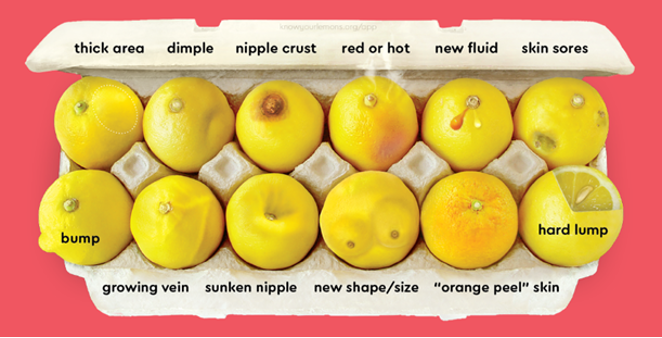
Inforgraphic content: Know Your Lemons
A carton of lemons used to represent various symptoms of breast cancer. Each lemon in the carton displays a different sign, including thick area, dimple, nipple crust, red or hot skin, new fluid, skin sores, bump, hard lump, growing vein, sunken nipple, new shape or size, and ‘orange peel’ skin texture. These visual clues help to educate about early detection of breast cancer. Sourced via: Know Your Lemons® for Early Detection | Early Detection for Breast Cancer
B – Bump: lumps in the breast or armpit
A lump in the breast or armpit is one of the most recognised symptoms of breast cancer. A lump in the breast or armpit is one of the most recognised symptoms of breast cancer. Although many lumps are harmless, a GP should assess any new lump.
Check for:
- new lumps in the breast
- lumps in the armpit
- thickened areas of breast tissue
If you notice a lump or unusual thickening, seek medical advice promptly.
C – Changes to the nipple
Changes to the nipple can be an early sign of breast cancer. Therefore, it is important to notice any differences.
Look for:
- nipple turning inward
- changes in colour or shape
- rash or crusting
- unexpected discharge
These symptoms may have other causes. However, medical assessment is essential.
D – Discomfort: persistent pain
Breast pain is common and often harmless. However, persistent or unusual pain should be checked.
For example, be aware of:
- ongoing breast pain
- pain in the armpit
- pain that does not improve over time
Although pain alone rarely indicates cancer, your GP should assess ongoing symptoms.
When to see a GP about breast changes
Contact your GP as soon as possible if you notice:
- a new lump in your breast or armpit
- changes in breast size, shape, or skin
- nipple changes or discharge
- persistent breast or armpit pain
- any unusual or unexplained changes
Most breast changes are not cancer. Nevertheless, early assessment provides reassurance and ensures appropriate care.
Why breast screening is important
Breast screening helps detect cancer before symptoms appear. As a result, treatment can Breast screening helps detect cancer before symptoms develop. As a result, treatment can begin earlier and outcomes improve.
The NHS breast screening programme invites people aged 50 to 71 who are registered as female with their GP. Screening takes place every three years and uses a mammogram, which is a specialised breast X-ray.
Breast screening can:
- detect cancer early
- improve treatment success
- reduce the risk of advanced disease
If you are eligible, you will receive an invitation automatically. However, contact your GP practice if you have questions or concerns.
Learn more about breast screeningBreast awareness is important for everyone
Breast cancer can affect anyone. Therefore, recognising symptoms early is essential.
Remember to:
- check your breasts regularly
- attend screening when invited
- report changes to your GP
- seek medical advice promptly
Even if you feel unsure, it is always best to get checked.
Frequently asked questions about breast cancer and breast screening
Key message: early detection saves lives
Checking your breasts regularly and attending screening appointments are simple but important steps.
If you notice anything unusual, contact your GP promptly. Early detection can make a life-saving difference.