
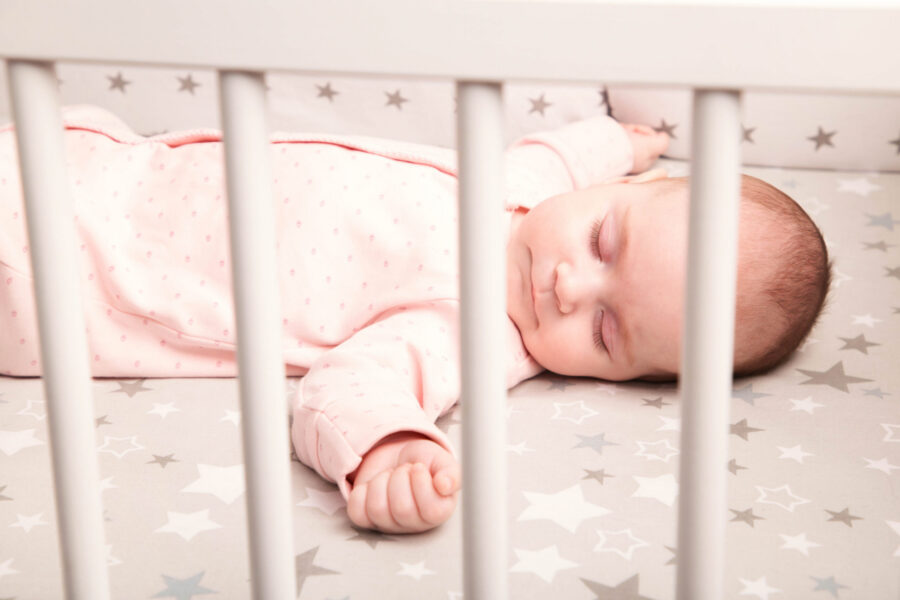
Becoming a new parent can feel overwhelming. There is a lot to learn in a short space of time, often with little sleep. One of the most important things to understand is how to create a safe sleeping environment for your baby.
Safe sleeping for babies helps reduce the risk of accidents and conditions such as Sudden Infant Death Syndrome (SIDS).
Why safe sleeping matters
For adults, sleep feels safe. For babies, there are real risks if they are not placed in a safe sleeping environment.
Babies, especially those under six months old, are at higher risk of SIDS. This is when a baby dies suddenly with no clear cause. While the exact cause is not fully understood, following safe sleep guidance can significantly reduce the risk.
Always place your baby on their back
The safest sleeping position for a baby is on their back.
For the first six months, always place your baby on their back to sleep. As they grow and begin to roll over independently, you can allow them to find their own sleeping position.
Use a cot or Moses basket
The safest place for a baby to sleep is in a cot or Moses basket.
Some products marketed for babies do not meet safe sleep guidance. Avoid using:
- Cushioned sleep pods
- Nests
- Baby hammocks
- Any products that strap or wedge a baby in place
These can increase the risk of harm, particularly for babies under 12 months.
Avoid co-sleeping in unsafe situations
It is safest for babies to sleep in their own space.
Sharing a bed with your baby (co-sleeping) can be dangerous in certain situations, including if:
- You or your partner smoke
- You or your partner have consumed alcohol or drugs
- You are extremely tired
- Your baby was born prematurely (before 37 weeks)
- Your baby had a low birth weight (under 2.5kg)
Never sleep on a sofa or armchair with your baby. This greatly increases the risk of SIDS.
Share a room for the first six months
The safest place for your baby to sleep is in the same room as you for the first six months, both day and night.
Place your baby in their own cot or Moses basket in your room. This helps reduce the risk of SIDS and allows you to respond quickly if needed.
Keep the cot clear
A clear cot is essential for safe sleeping.
Your baby only needs:
- A firm mattress
- Light bedding or a baby sleeping bag
Do not include:
- Pillows
- Duvets
- Soft toys
- Cot bumpers
Place your baby with their feet at the foot of the cot. Keep bedding tucked in and below shoulder level to prevent them slipping under covers.
Maintain a safe room temperature
Keeping the room at a safe temperature is important for your baby’s sleep.
The recommended room temperature is 16–20°C with light bedding.
Check your baby’s temperature by feeling their chest or the back of their neck. If they feel hot or sweaty, remove a layer of clothing or bedding.
Safe sleeping in colder weather
In winter, it can be harder to maintain a safe room temperature.
You can add an extra layer of clothing or bedding if needed. However:
- Do not cover your baby’s head
- Keep heating below 20°C if left on overnight
Always check your baby’s temperature rather than relying only on the room thermometer.
If you are struggling to heat your home, you may be eligible for support through the Warm Home Discount Scheme.
Safe sleeping in warm weather
In hot weather or when travelling, it is important to keep your baby cool.
You can:
- Use lighter bedding
- Dress your baby in fewer layers
- Let your baby sleep in just a nappy if it is very warm
Keep air circulating by opening a window (if safe) or using a fan. Do not point a fan directly at your baby.
Continue to check their temperature regularly.
Further information and support
For more advice on safe sleeping for babies, visit The Lullaby Trust. They provide trusted guidance to help you create the safest possible sleeping environment